
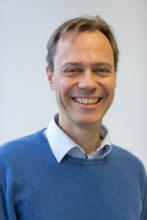
Prof. Dr. Christian Freund
Freie Universität Berlin
Institute for Chemistry & Biochemistry
Thielallee 63
14195 Berlin
Phone: +49 (30) 838 51189
Fax: +49 (30) 838 56413
E-Mail: christian.freund@fu-berlin.de
Research Area
Protein Biochemistry
Position and Status
Professor of Protein Biochemistry (W2)
Scholarships and awards
2009 - Joint grant recipient and winner of the “Innovationswettbewerb Medizintechnik” of the German Ministry of Education and Research
1999 - Biofuture award of the German Ministry of Education and Research
1997 - Post-doctoral scholarship by the Swiss National Funds
University training and degree
1986 - 1989 - Chemistry, Ludwig-Maximilians-Universität München
1983 - 1986 - Chemistry, Heinrich-Heine-Universität Düsseldorf
Advanced academic qualifications
2005 - Habilitation (venia legendi), Biochemistry, Freie Universität Berlin
1994 - PhD, Max-Planck-Institute of Biochemistry, AG NMR (Holak), Department of Structural Biology (Huber)
Postgraduate professional career
2018 (Jan-March) - Visiting scholar at the University of California San Francisco
2011 - present - Full professor of Biochemistry (W2), FU Berlin
2000 - 2011 - Independent research group leader, Leibniz-Institute of Molecular Pharmacology, Berlin
1997 - 2000 - Joint appointment post-doctoral fellow at Harvard Medical School/Dana- Farber-Cancer Institute in Boston with Prof. Gerhard Wagner and Prof. E. Reinherz (Scholarship by the Swiss National Funds).
1994 - 1997 - Postdoctoral fellow in the group of Prof. Dr. A. Plückthun, Biochemical Institute of the University of Zürich/Switzerland.
Coordinating functions and editorial work
2022 – present Speaker of the DFG Collaborative Research Center SFB/Transregio 186
2022 – present Head of the steering committee of the BioSupraMol facility at the Department of Biology, Chemistry and Pharmacology, FU Berlin
2019 – present Coordinator (with Nevan Krogan, QBI, UC San Francisco) of the FU Berlin-UCSF Collaborative Research Initiative
Since 2019 - Coordinator (with Nevan Krogan, QBI, UC San Francisco) of the FU Berlin- UCSF Collaborative Initiative
2016 - present - Founding member and Vice-chair of the DFG Collaborative Research Centre SFB/TRR 186 (Heidelberg/Berlin) “Molecular Switches in the Spatio- Temporal Control of Cellular Signal Transmission”
2016 - present - Editorial board member at “Scientific Reports”
2010 - 2013 - Spokesman (together with Prof. Hartmut Oschkinat) of the Forschergruppe "Interfering with intracellular protein-protein interactions-probing protein functions with small molecules" (FG 806).
2008 - 2009 - Spokesman of the “Zukunftsforum” of the Dechema (Gesellschaft für Chemische Technik und Biotechnologie e. V.).
Most important publications
- Abualrous, E. T., Stolzenberg, S., Sticht, J., Wieczorek, M., Roske, Y., Günther, M., Dähn, S., Boesen, B. B., Calvo, M. M., Biese, C., Kuppler, F., Medina-García, Á., Álvaro-Benito, M., Höfer, T., Noé, F. & Freund, C. MHC-II dynamics are maintained in HLA-DR allotypes to ensure catalyzed peptide exchange. Nature Chemical Biology 19, 1196-1204 (2023). https://doi.org/10.1038/s41589-023-01316-3
- Lan, H., Abualrous, E. T., Sticht, J., Fernandez, L. M. A., Werk, T., Weise, C., Ballaschk, M., Schmieder, P., Loll, B. & Freund, C. Exchange catalysis by tapasin exploits conserved and allele-specific features of MHC-I molecules. Nature Communications 12, 4236 (2021). https://doi.org/10.1038/s41467-021-24401-4
- Vardar, G., Gerth, F., Schmitt, X. J., Rautenstrauch, P., Trimbuch, T., Schubert, J., Lerche, H., Rosenmund, C. & Freund, C. Epilepsy-causing STX1B mutations translate altered protein functions into distinct phenotypes in mouse neurons. Brain 143, 2119-2138 (2020). https://doi.org/10.1093/brain/awaa151
- Morrison, E., Wegner, T., Zucchetti, A. E., Álvaro-Benito, M., Zheng, A., Kliche, S., Krause, E., Brügger, B., Hivroz, C. & Freund, C. Dynamic palmitoylation events following T-cell receptor signaling. Communications Biology 3, 368 (2020). https://doi.org/10.1038/s42003-020-1063-5
- Álvaro-Benito, M., Morrison, E., Ebner, F., Abualrous, E. T., Urbicht, M., Wieczorek, M. & Freund, C. Distinct editing functions of natural HLA-DM allotypes impact antigen presentation and CD4+ T cell activation. Cellular & Molecular Immunology 17, 133-142 (2020). https://doi.org/10.1038/s41423-018-0181-1
- Gerth, F., Jäpel, M., Pechstein, A., Kochlamazashvili, G., Lehmann, M., Puchkov, D., Onofri, F., Benfenati, F., Nikonenko, A. G., Fredrich, K., Shupliakov, O., Maritzen, T., Freund, C. & Haucke, V. Intersectin associates with synapsin and regulates its nanoscale localization and function. Proceedings of the National Academy of Sciences 114, 12057-12062 (2017). https://doi.org/10.1073/pnas.1715341114
- Henning, L. M., Santos, K. F., Sticht, J., Jehle, S., Lee, C.-T., Wittwer, M., Urlaub, H., Stelzl, U., Wahl, M. C. & Freund, C. A new role for FBP21 as regulator of Brr2 helicase activity. Nucleic Acids Research 45, 7922-7937 (2017). https://doi.org/10.1093/nar/gkx535
- Wieczorek, M., Sticht, J., Stolzenberg, S., Günther, S., Wehmeyer, C., El Habre, Z., Álvaro-Benito, M., Noé, F. & Freund, C. MHC class II complexes sample intermediate states along the peptide exchange pathway. Nature Communications 7, 13224 (2016). https://doi.org/10.1038/ncomms13224
- Kuropka, B., Witte, A., Sticht, J., Waldt, N., Majkut, P., Hackenberger, C. P. R., Schraven, B., Krause, E., Kliche, S. & Freund, C. Analysis of Phosphorylation-dependent Protein Interactions of Adhesion and Degranulation Promoting Adaptor Protein (ADAP) Reveals Novel Interaction Partners Required for Chemokine-directed T cell Migration*. Molecular & Cellular Proteomics 14, 2961-2972 (2015). https://doi.org/10.1074/mcp.M115.048249
- Günther, S., Schlundt, A., Sticht, J., Roske, Y., Heinemann, U., Wiesmüller, K.-H., Jung, G., Falk, K., Rötzschke, O. & Freund, C. Bidirectional binding of invariant chain peptides to an MHC class II molecule. Proceedings of the National Academy of Sciences 107, 22219-22224 (2010). https://doi.org/10.1073/pnas.1014708107