

News
Date
Over the summer of 2025, TRR186 scientist Prof. Cecilia Clementi (Freie Universität Berlin) contributed to two high-profile publications in Nature Chemistry and Science, bringing breakthroughs in protein simulations.
Advancing Protein Simulation with Machine Learning
In Nature Chemistry, Clementi and an international team introduce CGSchNet, a machine-learned coarse-grained model for proteins. The approach trains a graph neural network on thousands of all-atom molecular dynamics simulations to learn effective interactions between coarse-grained beads. CGSchNet can reproduce complex folding and unfolding dynamics at a fraction of the computational cost of all-atom simulations, while still capturing intermediate and metastable states that are crucial for protein function and misfolding, such as the formation of amyloid, which are pathological protein aggregates that appear in cases of Alzheimer’s disease, for example. The model also generalizes to proteins outside its training set and can estimate relative folding free energies of protein mutants, making it a promising tool for protein engineering and drug discovery.
“This work is the first to demonstrate that deep learning can lead to a simulation system that approximates all-atom protein simulations without explicitly modeling solvent or atomic detail”
Prof. Cecilia Clementi.
Understanding How Proteins Function with Artificial Intelligence
In Science, Clementi and colleagues from Microsoft Research AI for Science and Freie Universität Berlin report BioEmu, a generative deep learning system that emulates the equilibrium behavior of proteins. BioEmu can generate thousands of statistically independent protein structures per hour on a single GPU, integrating over 200 milliseconds of molecular dynamics simulations with experimental data. This allows the model to predict structural ensembles, thermodynamic properties, and stability changes with an accuracy that approaches laboratory measurements, while revealing hidden binding pockets, domain motions, and local unfolding events that are central to understanding protein function and drug design.
“BioEmu provides a scalable method to model protein function at the genomic scale”
Prof. Cecilia Clementi.
Impact and Significance
Together, CGSchNet and BioEmu provide fast ways to explore how proteins move, fold, and bind ligands with near all-atom accuracy at a fraction of the computational cost of traditional methods. These studies are expected to have significant implications for understanding proteins dynamics and drug discovery. For TRR186, this means concrete new capabilities to:
-
Follow conformational changes in receptors and membrane protein complexes by efficiently sampling large-scale motions and state transitions.
-
Reveal “hidden” binding pockets by generating rare conformations and local unfolding events that are invisible in single static structures.
-
Connect atomistic and mesoscale models by translating detailed simulations into coarse-grained descriptions of protein assemblies that remain faithful to their thermodynamics.
These advances also highlight the strength of the Berlin ecosystem in AI-driven molecular science, with TRR186 at its core.
About Prof. Cecilia Clementi
Professor Cecilia Clementi is a theoretical and computational biophysicist. Within the TRR186, she leads project A12 "Machine-learned coarse-grained molecular dynamics of molecular complexes." She has previously conducted research as an Einstein Visiting Fellow at the Collaborative Research Centers “Investigation of Membranes – Molecular Mechanisms and Cellular Functions” and “Scale Cascades in Complex Systems” at Freie Universität Berlin. She is also the first scientist to be permanently recruited to work in Berlin following her support as an Einstein Visiting Fellow. Before moving to Berlin in 2020, Clementi was a professor of chemistry and physics at Rice University in Houston, Texas.
Further information:
-
Charron, N.E., et al. “Navigating Protein Landscapes with a Machine-Learned Transferable Coarse-Grained Model.” Nature Chemistry (2025). DOI: 10.1038/s41557-025-01874-0.
-
Lewis, S. et al. “Scalable Emulation of Protein Equilibrium Ensembles with Generative Deep Learning.” Science (2025). DOI: 10.1126/science.adv9817.
-
FU Berlin press releases (English):
Date
Location
Berlin
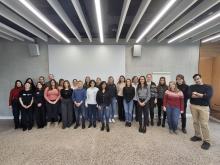
Yet another successful retreat for the PhDs and postdocs of our consortium. During the 3-day event, the researchers gathered to discuss the latest developments in their project and strengthen the community. The poster session sparked lively exchanges and scientific discussions between researchers across Berlin and Heidelberg.
We were also delighted to welcome two invited guests: Daniel Morales, Senior Editor at Nature Communications, and Prof. Cecilia Clementi from Freie Universität Berlin (represented by two of her PhD students). In his talk, Daniel shared insights into scientific writing and the publication process from an editor’s perspective. The workshop “AI in Science” explored principles and applications of machine learning in molecular dynamics simulations of protein complexes.
Of course, there was also time for networking and community building, including a visit to a local Christmas market near the beautiful Charlottenburg Palace and a joint dinner at Trattoria La Romana.
Big thanks to the organizers: Tamina Werk, Ana knez, Ali Lashkari, Yagmur Urem
Date
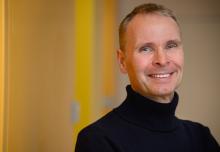
Breaking news: we are proud to announce that one of the principal investigators of the TRR186 has been awarded the prestigious Ernst Schering Prize 2025.
Prof. Volker Haucke, Director at the Leibniz-Forschungsinstitut für Molekulare Pharmakologie (FMP) and Professor of Molecular Pharmacology at Freie Universität Berlin, has been named the recipient of the Ernst Schering Prize 2025. This science award honors his groundbreaking discoveries on the function of signaling lipids, which control the cellular responses to messengers, hormones, and nutrients, thereby shaping central processes in cell communication. His work paves the way for new therapeutic strategies in stroke, neurological disorders, and cancer.
The award ceremony will take place on 24 November 2025 in Berlin.
Link to Press Release: https://leibniz-fmp.de/newsroom/news/detail/volker-haucke-receives-the-ernst-schering-prize-2025
About the Ernst Schering Prize
The Ernst Schering Prize, endowed with 50.000 euros and presented by the Schering Stiftung (Schering Foundation), is one of Germany’s leading awards for outstanding basic research in the life sciences and chemistry. It honors discoveries that reshape fundamental understanding and open pathways toward medical or technological advances. The prize recognizes work of broad scientific impact and translational potential, making it a key marker of excellence in European biomedical research
Text: Francesco Cannizzaro
Date
Nevan Krogan, head of the Institute for Quantitative Biosciences at the University of California, San Francisco (USA) will be an Einstein Visiting Fellow in collaboration with the group of Christian Freund, at the FU Berlin.
For further information please see press release.
Date
Volker Haucke has been awarded the prestige "Gottfried Wilhelm Leibniz Prize" from the German Research Foundation 2025.
Date
Cecilia Clementi was awarded the Order of Merit "Star of Italy" of the Republic of Italy on November 19th.
Date
DFG grants the third funding period of the Collaborative Research Centre SFB/TRR 186 Berlin-Heidelberg.
With the third funding period,TRR 186 will be supported by the DFG for a total of 12 years.
For more information from DFG, please see hier.
Date
Britta Brügger was awarded a BMBF grant for global and spatial lipidomics as part of the LINC programme with researchers from Münster, Essen, Heidelberg and Leipzig
Date